
Why Your Cable Choice Matters Far More Than You Think
In most industrial plants, cabling is treated as a commodity, a background decision, something you “just need to connect things.” The problem with that mindset? It holds until 3am on a Tuesday, when a failed cable shuts down an entire production line and that “saved” R200 becomes a R200,000 downtime event.
The Invisible Backbone of Every Plant
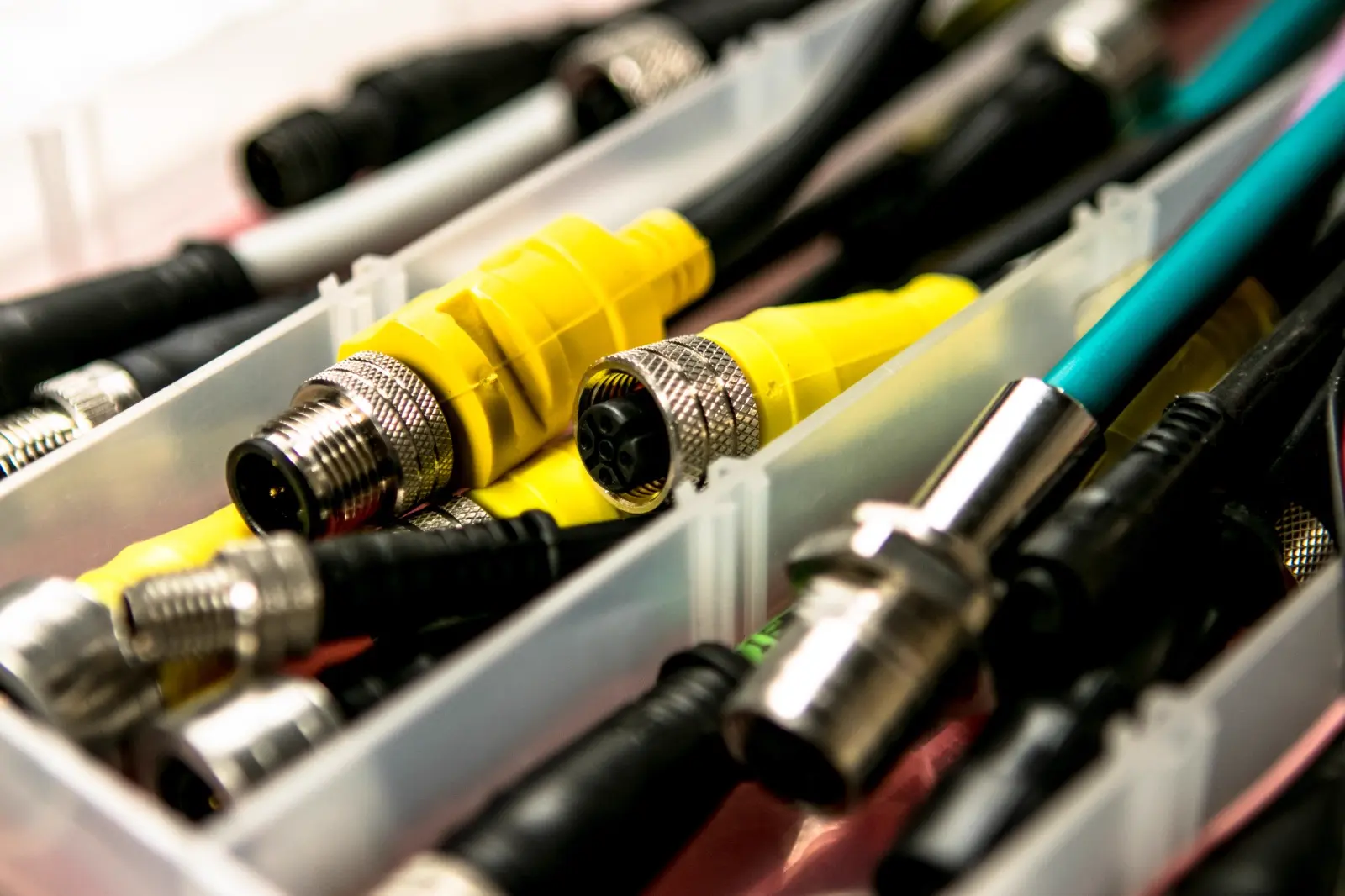
Walk through any manufacturing facility and you’ll find them everywhere, bundled, routed, clipped, and largely ignored. Cables. Miles of them. They carry signals, power, and data between every sensor, drive, motor, and controller in the building. And yet, they are almost universally treated as an afterthought.
The engineering hours go into specifying the right PLC, the right VFD, the right motor. The cable connecting them? “We’ll figure that out during procurement.” It’s a decision made on price alone, with no reference to the actual operating environment the cable will live in.
This is one of the most common, and most costly, silent mistakes in industrial maintenance.
Cable selection is not about getting power from point A to point B. It’s about ensuring reliability under the real conditions your plant actually runs in.
Real Conditions Are Brutal
The test lab doesn’t care about your installation. Your plant does. Consider what a cable experiences in a real industrial environment:
- Sustained heat: Cables near motors, furnaces, or in poorly ventilated conduits can see temperatures that degrade standard PVC insulation over months, not years.
- Constant vibration: Machinery transmits vibration through frames, panels, and cable trays. Over time, this fatigues conductors at termination points.
- Chemical and oil exposure: Coolants, hydraulic fluid, cutting oil, and cleaning agents attack non-rated cable jackets, causing swelling, cracking, and insulation breakdown.
- UV and outdoor exposure: standard cables used in outdoor runs degrade rapidly under UV, with jackets becoming brittle and cracking within 12-18 months.
- Repeated flexing and movement: Drag chains, robotic arms, and moving carriages bend cables thousands of times daily. Standard cables were never built for this.
Three Mistakes That Cost Plants Every Year
1: General-Purpose Cable in Harsh Environments
This is the most prevalent error. A general-purpose cable is designed for mild, static, indoor environments. Put it near a hydraulic press, a coolant nozzle, or a heat-generating drive cabinet, and the clock starts ticking immediately.
Oil-resistant cables, UV-stabilised outer jackets, and high-temperature-rated insulation exist precisely because standard cable fails in these conditions. These are not premium upsells, they are the right tool for the job.
2: Ignoring Movement and Bending Radius
In any application involving a drag chain, a sliding gantry, a robot arm, or any moving axis, cable selection becomes critical engineering. Every bend cycle stresses the conductor and the insulation. Standard fixed-installation cables fail prematurely, often within weeks, in high-cycle applications. Flex-rated cables are constructed with finely stranded conductors, specially formulated jackets, and controlled pitch lay specifically to survive millions of bend cycles. Using the wrong cable here isn’t a cost saving, it’s a guaranteed maintenance problem.
3: Underspecifying to Save on Upfront Cost
The economics feel compelling in the moment: the specified cable costs R180 per metre, the alternative is R60 per metre, and there are 200 metres to run. You save R24,000. What this calculation never includes is the labour cost of replacement, the production losses during downtime, the emergency procurement premium when you need cable urgently, and the cascading damage when a cable fault takes out a connected drive or sensor.
The true cost of a failed cable is rarely just the cable itself:
- High Voltage Management reported that 42% of unplanned downtime costs are equipment-origin. Implementing a rigorous cable management strategy ensures your infrastructure isn’t part of that statistic.
- Heavy Vehicle Inspection & Maintenace reported that reactive maintenance can costs 3–9 times more than planned maintenance. Proactive cabling oversight is the simplest way to avoid these massive emergency premiums.
- ABB’s survey revealed that on average, it costs $125K per hour of unplanned outage. High-quality cabling standards are a low-cost insurance policy against these high-stakes outages.
How to Think About Cable Selection Correctly
The right framework is not “what’s the cheapest cable that meets the nominal spec?” It’s: “What environment will this cable actually operate in, and what does that demand from it?”
This means thinking through temperature rating, chemical exposure, mechanical stress, movement cycles, UV exposure, and installation method before specifying. It means reading the application, not just the datasheet line for conductor size and voltage rating.
For critical applications, servo drives, drag chains, outdoor runs, chemical-adjacent installations, specify cables that are tested and rated for exactly those conditions. The certification markings on industrial cable (oil-resistance, flex-cycle ratings, UV stability, temperature range) aren’t marketing language. They represent real test data that tells you whether the cable will survive your environment.
For standard panel wiring and fixed runs in benign environments, general-purpose cable is entirely appropriate. The discipline is in accurately reading the environment and matching the spec to reality.
The Reliability Argument
Every component in your system has a role in the overall reliability number. Engineers obsess over drive MTBF, sensor ratings, and bearing life, but rarely apply the same rigour to cable selection. Yet a cable is the connective tissue of your system. When it fails, everything it connects fails with it.
A correctly specified cable for its environment will outlast the equipment it serves. An incorrectly specified one will be replaced repeatedly, and each replacement carries the full cost of labour, downtime, and opportunistic damage. The cable is not a cost to be minimised. It is a reliability investment to be specified correctly.
A Cable Is Not Just a Cost
It’s a structural part of your system reliability. Specify it like one, and your plant will thank you in uptime, not in emergency callouts.