
Why Circuit Breaker Toggles Have Different Colours (And What They Mean)
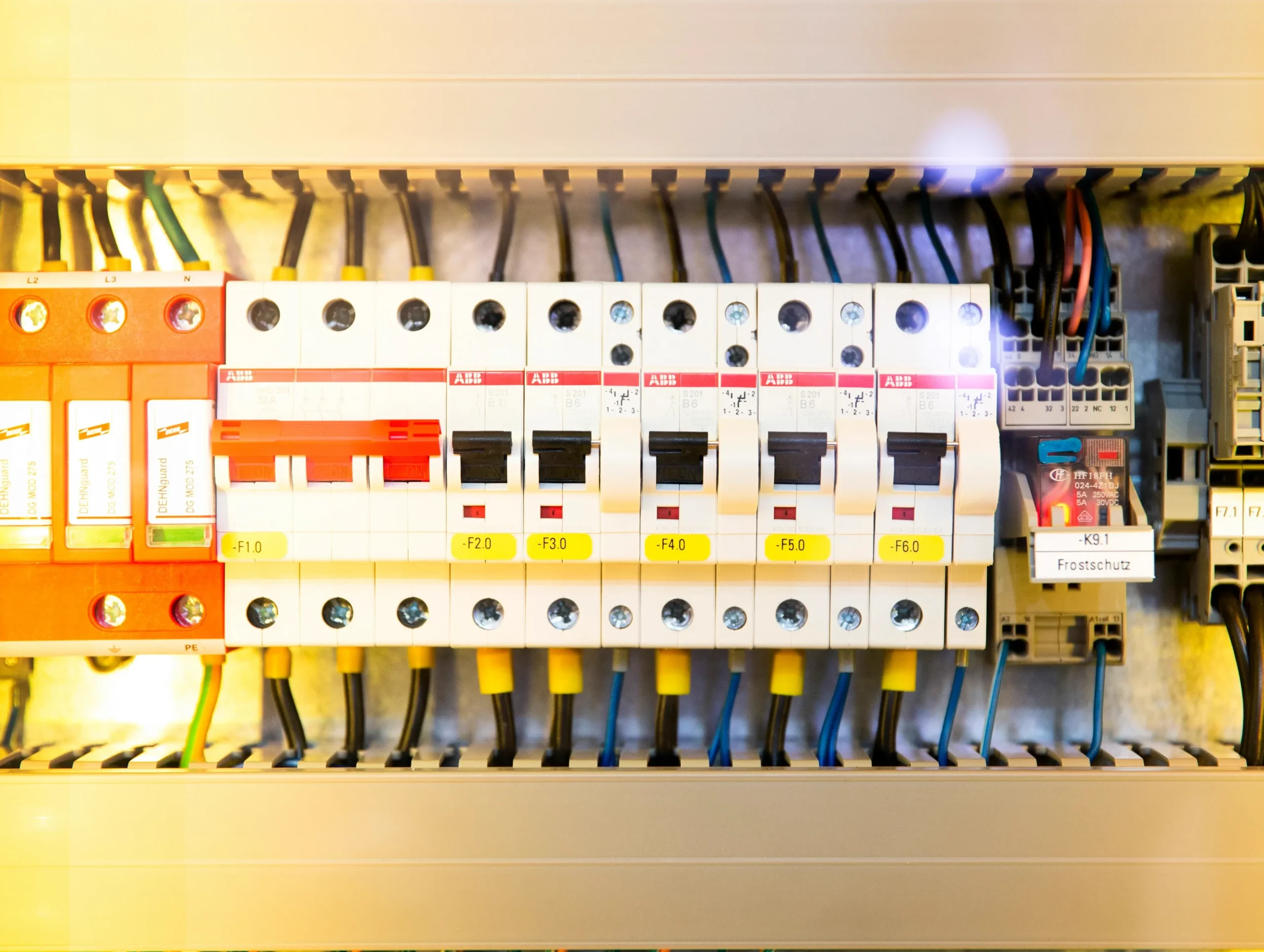
Ever had a circuit breaker in your hand, flicking the switch for the satisfying click, and then stopped to wonder – why?
Why does the breaker toggle have a colour? Red, black, blue, what does it mean?
Circuit Breakers
Circuit breakers are electrical safety devices designed to protect circuits from excessive current, known as overcurrent.
They automatically interrupt the flow of electricity when a fault occurs, helping prevent damage to equipment and wiring, and reducing the risk of fire.
When a fault occurs, the breaker will “trip”, moving the toggle from the ON position to the OFF position, disconnecting the electrical circuit.
Toggle Colour
All circuit breakers have a maximum fault current that they can safely interrupt without failure, known as the breaking capacity.
Some manufacturers may use different toggle colours to distinguish between product ranges, which can include breakers with different breaking capacities (typically expressed in kA).
However, this is not standardized across the industry. Colour should not be relied upon as a definitive indicator of a breaker’s rating.
All circuit breakers clearly display their breaking capacity on the device itself. When in doubt, always refer to the markings on the breaker or the manufacturer’s technical documentation for guidance.
Summary
Circuit breakers provide a simple yet effective way of protecting electrical circuits, primarily governed by their rated current and breaking capacity.
While some manufacturers may use colour coding as a visual aid, it should only be used for quick identification—not as a substitute for technical specifications.
Before installation or system design, always verify the breaker’s ratings using the printed information or official product documentation.
When selecting a circuit breaker, it’s important to choose the correct rated current and breaking capacity. You can browse suitable options in our circuit breaker range.